Friday, November 29, 2013

. Focus on Feelings First

slideshare.com

Be thankfulfor customers who complain. You still have the opportunity to make them happy.

  • 8. Treat every customeras though they were your favorite celebrity, hero, friend, neighboror your grandma.
  •  Imagine that each customeris wearing a sign that says “Make me feel important.” 
Pretend your next customeris a mystery shopper ready to reward you with $1000 for providing superior service. 

  •  That’s Interesting…
  •  That’s Interesting… #1 Tell Me More
  •  That’s Interesting… #2Why would you Do That?
  • That’s Interesting… #3Why would you Say That?
  •  That’s Interesting… #4Why would you Ask Me That?
  •  
  •  
  • 21. • Go into computer mode. − Don’t take the Bait
  • 22. • Go into computer mode. − Don’t take the Bait − Speak generally, without Emotion
  • 23. • Go into computer mode. − Don’t take the Bait − Speak generally, without Emotion − Be an Automated Response System
  • 24. • Go into computer mode. − “People get irritated when they don’t immediately get the help they need.”
  • 25. • Go into computer mode. − “People get irritated when they don’t immediately get the help they need.” − “It’s very annoying to experience a delay in service response.”
  • 26. • Go into computer mode. − “People get irritated when they don’t immediately get the help they need.” − “It’s very annoying to experience a delay in service response.” − “Nothing is more distressing than feeling like you’re being passed around when all you want is help.”
  • 27. • Go into computer mode. − “Have I don’t something to personally upset you?” − "There is no need to yell or be loud to get my attention; I promise to give you that.“ − "I really want to help you, but your foul language is getting in the way."
  •  
  •  
  •  
  •  
  •  
  •  
  •  
  • 33. Get Some Space
  • 34. • Get Some Space − “Why don’t you come in my office where it’s quiet and I can focus on what you’re saying.”
  • 35. • Get Some Space − “Why don’t you come in my office where it’s quiet and I can focus on what you’re saying.” − “Let’s step over here where it’s quieter and I can hear you better.”
  • 36. • Get Some Space − “Why don’t you come in my office where it’s quiet and I can focus on what you’re saying.” − “Let’s step over here where it’s quieter and I can hear you better.” − “Why don’t we step outside so you can have some privacy?” 


  • 71. Don’t throw your co-workers under the Bus.
  • 72. Don’t throw your coworkers under the bus. Leading: “Which part of the bill did they get wrong?”
  • 73. Don’t throw your coworkers under the bus. Leading: “Which part of the bill did they get wrong?” Neutral: “Which part of the bill concerns you?”
  • 74. Don’t throw your coworkers under the bus. Leading: “Which part of the bill did they get wrong?” Neutral: “Which part of the bill concerns you?” Leading: “How did he insult you?”
  • 75. Don’t throw your coworkers under the bus. Leading: “Which part of the bill did they get wrong?” Neutral: “Which part of the bill concerns you?” Leading: “How did he insult you?” Neutral: “What did he say to you?” 
  • 76. Then Don’t Waste a Breath.
  • “I can explain that to you.”
  • “I believe I can help.”
  • “Let’s walk through the Rules & Regulations together.”
  • “Why don’t you ask me questions, and I’ll help you understand.” 


  • 81. Be There to Help.
  • 82. Be there to Help.- “The employee’s manager will talk to him and ensure this situation doesn’t recur.”
  • 83. Be there to Help.- “The employee’s manager will talk to him and ensure this situation doesn’t recur.”- “We’ll make a note on your record and ensure that this doesn’t happen again.”
  • 84. Be there to Help.- “The employee’s manager will talk to him and ensure this situation doesn’t recur.”- “We’ll make a note on your record and ensure that this doesn’t happen again.”- “Our truck will be at your home first thing in the morning.” 

  • 85. Offer Solutions.
  • 86. Offer Solutions. When you can’t repair the problem as soon as your customers want, play up the positive side of what you’re doing. 


90. Dear Customer:Thank you for notifying us of your complaint. We strive to provide you withthe best possible service, and when you feel that it fails to meet yourexpectations, it’s important for us to know.We’re sorry that you received service that prompted you to contact us with acomplaint, and we regret any inconvenience or frustration that yourexperience has caused you. To ensure that our staff conducts itself in amanner that reflects the high regard that we have for our customers, we’venotified the proper department of your complaint.Your patronage is important to us, and we hope that you’ll continue to give usopportunities to serve you.Thank you again for bringing these matters to our attention.Sincerely,

 LAST•Listen•Apologize•Solve•Thank 


  • 6. Listen- “I know you’re upset; I’m here to help you.”
  • -“I understand what you mean.”
  • ”-“I see what you’re saying.”
  • -“That’s an interesting point.”

  • 100. Listen Phrases to Avoid
  • 101. Listen Phrases to Avoid- “I don’t want to argue with you.”
  • 102. Listen Phrases to Avoid- “I don’t want to argue with you.”- “Let’s discuss this peacefully.”
  • 103. Listen Phrases to Avoid- “I don’t want to argue with you.”- “Let’s discuss this peacefully.”- “I’m sure we can come to an agreement quickly if…” 
  •  ApologizeBe careful not to over-apologize. You risk making the situation worse than it is, alienating customers even more and possibly setting yourself up for a lawsuit. 
  • 118. SolveShow why the problem occurred, whether ornot the complaint was valid.
  •  “You have the same name as one of our other customers, and our system confused the two.”
  • “We never received your address change form, and your coupons/notice went to the wrong address.”
  •  “This never happened before so we couldn’t anticipate it.”

  • 22. SolveDiscuss Objective Evidence- “According to your Bylaws, you can only...”
  • 123. SolveDiscuss Objective Evidence- “According to your Bylaws, you can only...”- “The Rules & Regulations require that we take those steps to avoid....”
  • 124. SolveDiscuss Objective Evidence- “According to your Bylaws, you can only...”- “The Rules & Regulations require that we take those steps to avoid....”- “Our customers indicated that they would prefer if we…”
  • 125. SolveDiscuss Objective Evidence- “According to your Bylaws, you can only...”- “The Rules & Regulations require that we take those steps to avoid....”- “Our customers indicated that they would prefer if we…”- “I understand your point; however, the Bylaws require that I…” 

  • 26. SolveForward-Looking Phrases- “Every situation has downsides, I agree. Now tell me what you think we can do about them.”
  •  “We’ll address each of those issues when they come up.”
  •  “We’ve addressed each of those drawbacks in previous projects, so we have plenty of solutions we can apply.” 


Tuesday, November 26, 2013

handset related query

Customers in Germany are reporting the network problems while using iPhone 4S. This particular issue arises when an already activated micro-SIM card (For example, from the iPhone 4), which is protected by a PIN, is placed in the iPhone 4S. The problem is not related to any disruptions in network or a defect in the SIM card and the abnormality is observed by all network providers and is not a telecom-specific problem. Tea-Mobile is working with Apple and has provided a temporary solution, till the Apple pushes an update to mobile operating system iOS 5.

How to disable the PIN code request of micro-SIM used in iPhone 4S

Step 1: Select the Startup Screen “settings” and then “Phone”
Step 2: Choose menu “SIM PIN”
Step 3: Move the slider to off (0)
Step 4: You will be prompted to enter the PIN. Enter your four-digit PIN and confirm by pressing “Done” at the top.
Step 5: Now you can see, the PIN code request is turned off for your Micro-SIM.
Step 6: Set this now into your new iPhone 4S.


Answers to some of your questions if your phone freezes, locks up, or becomes unresponsive
There are a number of reasons why your Samsung Galaxy S II may freeze or become unresponsive, including:
  • Unstable application
  • Low internal memory
  • Multiple applications or widgets running at the same time
  • Your Samsung Galaxy S II software may need updating
  • Why is my Phone battery life inconsistent?
    How fast your battery runs down depends on what you do on your Apple iPhone 5. Features like Bluetooth®, GPS, games and web browsing put more strain on the battery than simple features like voice calls and text messages.
  • How can I conserve my Phone battery life?
    You can lower screen timeout and brightness, turn off idle radios and apps, use Wi-Fi whenever available, and limit your email updates and application notifications.

BBM for iPhone update fixes crashing issue on iOS 7.0.3

That was quick! BlackBerry has just released an update for BBM for iPhone to fix the compatibility related issues reported in iOS 7.0.3.
The update also brings features such as Contact Categories, list sorting and filtering in BBM Groups and performance improvements.

Here’s what’s new in BBM 1.0.2:
  • Contact categories
  • List Sorting and filtering in BBM Groups
  • Performance improvements
  • Bug fixes
If the app hasn’t been automatically updated, you can download the update via the Updates tab in the App Store app or use this iTunes link.
Let us know if it has fixed the crashing issues in the comments below.


iphone 4 reception issues - design related?

When the guy holds the iPhone in his hands, touching the outside antenna band in two places, he drops reception. Placing the phone down gets him 4 bars


1. How to solve the iPhone 5 Wifi connection problems
Plenty of iPhone 5 users have encountered the Wifi connection problems. They reported it is hard for their iPhone 5 to connect specific Wi-Fi networks. The connection is unworkable or unstable. Even if users stand next to the routers, they found signal strength is too low to do the connecting. But when they change to other handsets to do the Wi-Fi connection, it works well.
Solutions: The awful Wifi signal problem may be caused by the iOS bugs which engender the bad connecting speed or failed entrance of iPhone 5’s Wifi radios. Hence, Apple launched the iOS 6.0.2 to help fix the bug. If you still meet the Wifi connection problems, you can try to restart the phone. Holding down the Home button as well as the Lock button together for several seconds, you will find the Apple logo then the iPhone restarts. After restart iPhone 5, try again to do the Wi-Fi connection.
If the Wifi problem is still unsolved, please try the optional solution
by going to Settings> Wi-fi > Blue icon nearby the network you are trying to connect > Scroll down the bottom > Set the HTTP Proxy to Auto. (Make the URL item blank)
2. Solutions to the iPhone 5 home button problems
The frequent irresponsive home button problems trouble lots of iPhone 5 owners. They are annoyed much by the problems and complain it constantly. Also, the iPhone 5 home buttons are worn out easily by long-term usage.
Solutions: If the iPhone 5 home buttons break accidentally, you can take the phone to Apple Store to get it repaired or replaced when your phone is under warranty. If your phone is out of warranty and you need to use the phone in urgency, you can try the following solution: go to Setting > General > Accessibility > Assistive Touch and turn it on. A small circle will show up on the screen. After you tap it, these options Home, Siri, More and Favorites are accessible and allow you to bypass the home button.

3. How to handle unworkable power button issues
Many iPhone 5 users are tired of the power button issues, for the power button does not response well. Sometimes, the iPhone 5 power buttons require multiple pushes to make it workable. Sometime, the power button acts less responsive if you only hold down the right side, while responds normally when you press the left side.
Solutions: This is the smartphone’s hardware problems. Take it to Apple Store to get it repaired if your phone is covered by valid warranty. Or you can take it to the phone carrier to see if they have relative solutions.
4.   How to Avoid the iPhone 5 Scratches Problems
More users reported the scratch problem on the body. The iPhone 5’s anodized aluminum back cover easily suffers scratches than standard aluminum used in other phones. The iPhone 5 rear housing can’t stand normal scratch and the coating of the back panel is easily to be scratched off.
Solutions: Facing the scratch complaints, Phil Schiller – the Apple’s marketing director responded “Any aluminum product may scratch or chip with use, exposing its natural silver color.” Even so, nobody likes to hold a defective handset. To better protect your iPhone 5 from scratching, you are supposed to purchase an iPhone 5 case when you get a new intact iPhone 5 in hand.
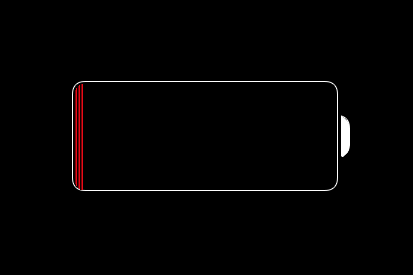
5.   Solutions to Overheating and Rapid Battery Drain
A number of iPhone 5 customers reported their iPhone 5 batteries drain very fast and the unit also suffers overheating. Apple claimed iPhone 5 battery can last up to 225 hours in standby condition. But, some were surprised to find their full-charged iPhone 5 batteries lose 40% power within one hour.
Solutions: Usually, batteries will drain fast when they are overused. If you encounter the excessive battery drain issues like this, you are recommended to turn off those apps you don’t use. Or go to Setting>Mail, Contacts and Calendars>Fetch New Data and turn off the Push, then select Manually on the screen. Some users find the setting is helpful to handle the problem of overheating and rapid battery drain. But it means you need to open the email app to get updated emails.
Some users also mentioned the hard resetting solution to the battery issues. Pressing the power button and lock button simultaneously until the iPhone restarts. If it is unworkable, maybe you can try to delete the Exchange account and restart the iPhone 5 to create a new Exchange account.
6.   How to Solve Rattling Issue
People can find posts on the Apple.com forums stating iPhone 5’s rattle problem. These owners lightly shake their devices and find the rattling noise. The noise is annoying and some guess the noise happens due to the loose battery.
Solutions: You can ask professional help by taking your iPhone 5 to Apple store. The workers can fix the unglued battery. Or you can tear down iPhone 5 to do the job by yourself, but please note that disassembling iPhone 5 will void the warranty.
7.   How to Handle the Leaking Light Problem
A number of iPhone 5 users posted to multiple forums claiming the leaked light problem existing on iPhone 5. The lights are leaked out from the top right corner of the screen or the gap around the device’s power connector and antenna. Although the leak is not obvious unless you check it in low light or dim place, from iPhone fanciers’ point of view, it can’t be tolerant for this high-end smartphone.
Solutions: It is a hardware issue. Go to Apple store and look for replacement.
For these above-mentioned issues, related solutions are provided. But Apple supporters will get upset when they encounter these issues or other problems. Anyway, iPhone fans hope the new iPhone 5S comes with these issues worked out. If there are any other issues you don’t want on the iPhone 5S, then please share your ideas with us.


6 problems with iPhone 5S, and how to fix them (including the Blue Screen of Death!)


Bug: Blue screen of death

Some people have run into a dreaded blue screen of death bug which seems to be related to specific apps. If you are using Pages, Keynote, or Numbers and you are in a document editing, then pressing the Home button can cause the iPhone 5S to crash to a blue screen, which is generally followed by a reboot. Some people are reporting this issue with other apps as well, and in severe cases it is causing a reboot loop. There’s a theory that the iPhone 5S is afflicted because it has a 64-bit processor trying to run 32-bit software (it’s the first 64-bit phone). Developers are already updating apps to work with the new processor more fluidly and Apple will likely release an update to fix it at some point, but in the meantime there’s no solution, only workarounds that have worked for some people.
(Editor’s Note by Jeffrey Van Camp: Our iPhone 5S here at DT has rebooted randomly a few times since we got it in September, but we have not experienced a blue screen of death. Apps do crash more frequently, but these are usually apps that haven’t been updated to iOS 7.)
Workarounds:
  • Always make sure you back out of documents before tapping that Home button.
  • Disable iCloud sync for the iWork apps by going to Settings > iCloud > Documents & Data, and sliding Pages, Keynote, and Numbers to off.
  • Try to use apps that have been updated to take advantage of iOS 7. Apple has not updated Pages, Keynote, or Numbers. You can tell 
  • If the problems are constant, or frequent to the point of impeding your experience, please contact Apple customer service.

Glitch: Faulty sensors

A lot of people are reporting that the sensors in the iPhone 5S are wildly inaccurate. We mentioned in our iOS 7 tips that you can access a spirit level (Apple calls it an inclinometer) by swiping left in the Compass app, but it turns out that it’s not working correctly. In fact, the compass, accelerometer, and gyroscope have also been malfunctioning for some people. The level of fault varies, but it does seem to be an issue that’s specific to the iPhone 5S.
(Editor’s Note by Jeffrey Van Camp: We have not had trouble with the sensors on our iPhone 5S, though we do experience occasional ticks in the parallax effect on the home screen, which moves the background of the phone to produce a 3D effect.)
Potential solution:
Your only option right now is to take the iPhone 5S back to the Apple Store and ask for a replacement, but be warned, many customers who have done exactly that are reporting that their replacement iPhone 5S has the same issues. It’s not clear if this is a hardware or software fault. If it is software-related, we expect an update to fix it, but until Apple acknowledges the issue, it’s a mystery.

Annoyance: Noisy and rattling buttons

A lot of people have been complaining about the Home button clicking loudly and the Power button rattling when the iPhone 5S is shaken. People who went to get replacements, or tested other iPhone 5S handsets, found the exact same rattle and click was present. It’s just the way they’re constructed. Some people have reported a louder thudding rattle which could be caused by a loose battery.
(Editor’s Note by Jeffrey Van Camp: From our experience using the iPhone 5S, the Touch ID Home button may have a slightly louder click and the power button does rattle if you put your ear up to the phone and shake, but these problems didn’t bother us. In fact, I never noticed them until I read that others were annoyed by it. As for the battery issue, we have not encountered it, but it is not normal and would be a serious problem.)
Potential solution:
  • Your only real option here is to take your iPhone 5S into an Apple Store and show them. If it is a loose battery then they’ll be able to fix it, if not then you may have to learn to live with the ‘noise.’

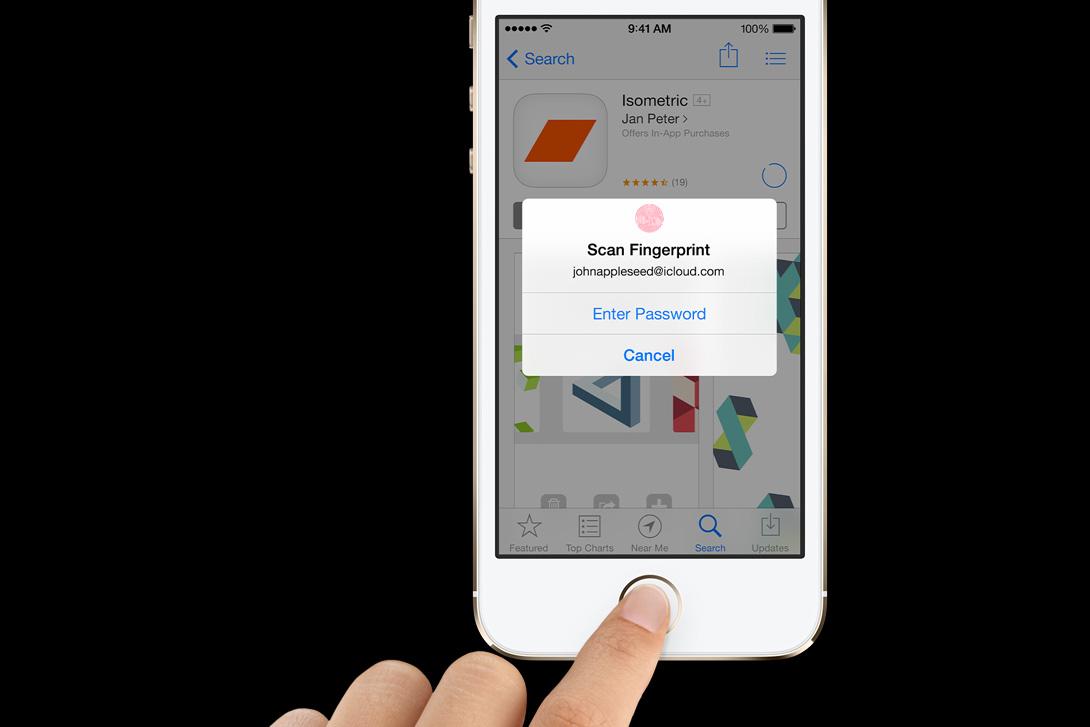
Bug: Touch ID not working for iTunes purchases

Apple was quick to address this issue with a bug fix. The problem was that the iPhone 5S would not accept the user’s fingerprint to authenticate an iTunes purchase and would insist on them entering their password.
(Editor’s Note by Jeffrey Van Camp: On our iPhone 5S unit, we do have to enter a password every 5-10 purchases. This is annoying, but appears to be intended for security purposes. Hopefully Apple will lax up on passwords more in the future.)
Solution:
  • This was fixed in the 7.0.1 update. Make sure you have it by going to Settings > General > Software Update on your iPhone 5S. You can also hook up your iPhone 5S to your computer and check under Devices in iTunes and then tap Check for Update.

Glitch: Overheating and battery drain

A few people have reported their iPhone 5S overheating. This is usually related to the battery and goes hand-in-hand with rapid battery drain. In rare cases it could be caused by a hardware fault, but it’s more likely to be iOS 7 and/or a specific app. There are a couple of things worth trying to identify and fix the issue.
Potential solutions:
  • Press and hold the Sleep/Wake button and the Home button to reboot your iPhone 5S and then pay close attention to what you are doing when it next overheats. You might be able to identify the app or service causing the problem. You could also try an app like System Activity Monitor ($2) to see if you can find the culprit.
  • Backup and restore your iPhone 5S and then be choosy about what you reinstall on it.
  • If you still can’t find the problem then head to an Apple Store to make sure there’s no hardware fault.

Problem: Microphone not working

A lot of people have run into issues with the microphone not picking up their voice clearly. They can’t record voice notes in a specific app, or they can’t be heard during calls. There are a couple of possible causes for this.
Potential solutions:
  • Make sure that you have removed the protective film from the screen.
  • If the problem is with a specific app then make sure it has permission to use the microphone in Settings > Privacy > Microphone.
  • It’s possible that your case is interfering with the noise cancelation feature. Try using the iPhone 5S with the case off, or head into Settings > General > Accessibility and turn Phone Noise Cancelation off to see if it makes a difference.
  • If your problem persists, contact Apple customer service.


benefits of wi-fi

Wi-Fi
Wi-Fi is one of the most underused and useful features on a smartphone, tablet, or a computer.
It's a short-range static wireless connection. Anyone can set up a Wi-Fi network with an Internet connection and a router or a Wi-Fi hotspot.
Some benefits of using Wi-Fi:
  • Preserves battery life: Up to 50% less power when connected to Wi-Fi instead of using a data connection on the Sprint networks.
  • Talk and surf the Web at the same time: With a Wi-Fi connection you can browse the Web and talk on the phone.
  • Improves in-building coverage with faster data speeds.
  • Find Wi-Fi hotspots at public places like shopping centers, cafes, hotels or airports.
  • Traveling internationally: Wi-Fi capability is a must-have to get access to email and other applications.
  • Easy connectivity to Wi-Fi networks: Even though Wi-Fi offers static coverage to a specific area, you can connect to Wi-Fi networks without needing to re-enter the settings each time.

preposition


Addition

Again, Along with, And, And then, Another, Apart from, Also, As well as, Besides, Besides which, Equally important, First, Second, etc, For example, For instance, Further, Furthermore, In addition, In addition to, likewise, / Additionally / An additional, Furthermore, Moreover, Not to mention, Not only,
Next, Nor, One could also say, Too, what’s more
Finally, Incidentally, lastly

Agreement

Of course, Admittedly, It is true that,
Certainly, No doubt

Clarrification

For instance, In other words, Put another way, That is.

Comparison

After all, Another way to view this, As, Also, At the same time, Balanced against, By and large, by and large, By comparison, Compare, compare(d) to / with ,
In comparison, in a like manner, in like manner, in a similar manner ,In the same way, In the same manner, Just as , Just like , Like, Likewise Meanwhile, Not only...but also , Same as , Similar to , Similarly, Simultaneously, whereas
like, while

conditional

as long as, even if, if, one condition that, provided(that), providing(that)
so long as, unless, whether......or

Contrast

In theory… in practice…
A different view is, after all, although, Although this is, And, And yet. apart from,
Balanced against, But, but at the same time, By (way of) contrast
Conversely, Despite, despite the fact that, Differing from, even if, even so, even though, except that, for all that, However, in comparison, In contrast, In fact, in reality, in spite of, in spite of, in spite of the fact that, instead, then, much as, Nevertheless, Nonetheless, Notwithstanding, nor, not that, On the other hand, On the  contrary, though,
Otherwise, regardless, still, true, Unlike, While, while this is true, whilst, Whereas, yet, 

Concession (indicates that the previous view is accepted with reservations):

Admittedly, After all, All the same, Although, although true, Altmay be truehough this, and yet, At the same time, Besides, Despite, Doubtless, Even if/though, Even so, granted perhaps, However, In spite of, Naturally, Nevertheless, No doubt, Nonetheless, Notwithstanding
of course, Only, Still, Under certain circumstances, Up to a point, While, Yet , 

CONCLUSION

Accordingly, Consequently, Finally, Ultimately
All in all, Altogether, As a result, As shown, Hence, In brief, In conclusion, In other words, In particular, In short, In summary, On the whole, To conclude, That is, Therefore, Thus So, To summarise, Summing up.

Emphasis

Again, As a matter of fact, For this reason, In fact, Indeed , In fact Particularly / in particular , To emphasize, To repeat
Admittedly, Clearly, Especially, Generally, Importantly, Obviously, truly, Undoubtedly.

Example

As an illustration, For example, For instance, Indeed, In fact, In other words, In particular, Including, Such as, That is (ie),
To demonstrate, To illustrate, In particular, , , , In this case, Take the case of, One example of this is, On this occasion,
Especially, Frequently, incidentally, Namely, particularly, Specifically. 

Manner

As, As if, As though, In a way, In the way, Just as, like, Much as, The way
Opposite idea or show exception:
Alternatively, In contrast, On the other hand
But, In spite of, Still
Despite, Instead, Whereas
Even though, Nevertheless, While
However, One could also say, Yet
Purpose
In case, In order, In order that, In order to, So, So as to, So that, to. 

Place/ Location

Above, Across, Adjacent, Adjacent to, Against, Along, Among, Around, At the side, Away from, Behind, Below, Beneath, Beside, Between, Beyond, By, Down, Elsewhere, Farther on, Here, Inside, Into, In front, In the background, In the distance, In the foreground, Near, Nearby, Off, On the other side, Onto, Opposite to, Outside, Over To the left, To the right, There, Throughout, Under,
Away from, At the side, In the back, In back of, In the distance, In the front, On top of, To the right, To the left/right, To the east/west/north/south.

Reason

As , as a result of, For, given that, in case, in view of the fact, Because , Because of, Due to / due to the fact that, just in case, on account of, Owing to / owing to the fact that, Since , that, seeing as/ that, considering.

Result

So , accordingly, and so, As a result , As a consequence (of) , because of, Consequently , Due to, due to this, else, or else, for this/that reason, Hence , in order that, now, otherwise, so, so that, then, Therefore ,Thus, the consequence is, the result is, This means that, consequently.

Reformulation (expresses something in another way):

Better, In other words, In that case, Rather
That is, That is to say, To put it (more) simply
Replacement (expresses an alternative to what has preceded):
Again, Alternatively, Another possibility would be, Better/worse still
On the other hand, Rather, The alternative is.

Show cause and effect

And so, Consequently, Therefore
As a consequence, For this reason, Thus
As a result, Hence
Then, Because, Consequently, Hence, For this purpose
Since, Accordingly, Therefore, Thereupon, Thus, To this end. 

Sequence

After, Afterwards, Also, Another, And then, At this point, At this time, Before, First of all, Followed by, Further / furthermore, In the first place, In the second place, In the third place, In addition, In conclusion, last, Meanwhile, Moreover, Next, To begin with, To summarise,
First / firstly, second / secondly, third / thirdly etc ,
The former, … the latter
The first point is
The following
Concurrently , Eventually, Finally, Lastly, Previously, Simultaneously, Subsequently, Ultimately.

Summarising

As a result, As shown, By and large, In brieft, In other words, In short, In a nutshell, In conclusion, To conclude, Therefore, Thus
Consequently, In summary, To conclude
Finally, On the whole, To summarise
Hence, Summing up, Ultimately.

Time

About, After, After a few hours, After a while, Afterwhich, Afterward, Afterwards, After a short time , And, As, As long as, As soon as, At, At last, At length, At that time, At the same time, At this point, At this time, At which(point) , Before, By the time, During, Earlier, First, Following, In the future, In the meantime, In the past, Later, Meanwhile, Next, Prior to, Next week, No sooner, Now, Once, Since, So far, Soon, Soon after, The moment, Then, Thereafter, Till, Today, To this day, Until, Until now, When, Whenever, Whereupon, while
Currently, Eventually, Finally, Formerly, Hardly, Immediately, Initially, Lately, Presently, Previously, Recently, Shortly. Simultaneously, Subsequently, Temporarily.

Monday, November 25, 2013

Troubleshoot issues related to email on your phone

This article helps troubleshoot email issues on your Apple iPhone 5.
You may have email issues if you're unable to:
  • Send emails
  • Receive emails
  • Access the data network

These steps help identify and resolve the underlying cause. After completing each step, test to see if the issue is fixed. If not, continue to the next step.
  1. Verify your Apple iPhone 5 is connected to the network or a Wi-Fi network using Safari.
    Be sure mobile data is enabled. Email requires a data connection to work properly.
    1. From the home screen, tap Safari.
    2. Try to browse to a web page.
    3. If your Apple iPhone 5 is still unable to browse to a web page, troubleshoot data connectivity and then verify email services.
  2. Verify that the email address and password are correct.
    1. Using Safari, navigate to your email provider's website and try to sign in to your email account.
    2. If you're unable to sign in, double-check that you entered the correct username and password.
    3. If you recently updated your email account password, you also have to update the email settings on your Apple iPhone 5.
  3. Double-check that you have set up your email account correctly on your Apple iPhone 5.
    This is the most common scenario and includes all major public email providers such as Yahoo!®, Hotmail®, Gmail?, and AOL®. Many companies provide a Microsoft Exchange email address to their employees.
    • For a personal email address:
      1. If you've already set up the email address on your Apple iPhone 5, try removing it from your device to delete any incorrect settings.
      2. This step doesn't delete any of your emails. It only removes the link to your account for now. Remove an email account from your Apple iPhone 5.
      3. Add your email account to your Apple iPhone 5.
    • For a business email address via Microsoft Exchange?:
      1. Sprint recommends that you contact your IT department for the correct setup information. You'll need your server address, domain, username, and your corporate password. After you have this information, set up the Microsoft Exchange account. If your Exchange account still doesn't work, contact your corporate IT department for more help.
  4. Perform a soft reset.
    A soft reset reconnects your Apple iPhone 5 to the telecom network.
    1. From the home screen, press and hold the Power key and the Home key.
    2. Release the Power key and the Home key when the Apple logo appears.
    3. Your Apple iPhone 5 restarts.
    4. Test your device to see if the issue is resolved.
Note: To optimize device performance, be sure your Apple iPhone 5 is running the most recent device software. Check for software updates.
If you're still having issues, please try our community pages for the Apple iPhone 5 or contact Sprint Customer Care for more help.


This article helps you troubleshoot data connectivity issues on your Apple iPhone 5.
You may have data connectivity issues if you're unable to:
  • Connect to the Internet
  • Browse websites
  • Send or receive multimedia messages
  • Load Internet content within applications
  • Send or receive email

These steps help identify and resolve the underlying cause. After completing each step, test to see if the issue is fixed. If not, continue to the next step.
  1. Verify airplane mode is turned off.
    Airplane mode is a feature that prevents your device from sending or receiving a wireless transmission.
    1. From the home screen, tap Settings.
    2. Tap the Airplane mode slider to OFF.
  2. Verify that mobile data is enabled.
    1. From the home screen, tap Settings.
    2. Tap Cellular.
    3. Next to Cellular Data, tap the toggle switch to enable mobile data.
  3. Verify your Apple iPhone 5 is connected to the telecom network using Safari.
    Be sure mobile data is enabled. Some features and applications require a data connection to work properly.
    1. From the home screen, tap Safari.
    2. Try to browse to a web page.
    3. If the data connection fails, update the profile.
    4. Test your device to see if the issue is resolved.
  4. Perform a soft reset.
    A soft reset reconnects your Apple iPhone 5 to the Sprint network.
    1. From the home screen, press and hold the Power key and the Home key.
    2. Release the Power key and the Home key when the Apple logo appears.
    3. Your Apple iPhone 5 restarts.
    4. Test your device to see if the issue is resolved.
  5. Do you know if other customers(of the same network) are experiencing the same problem in the same location?
    • If yes or you don't know: Please contact network Customer Care for help.
    • If no: Please find the nearest network Repair center and schedule an appointment so a Sprint technician can further diagnose the issue.
  6. Temporary solution: Connect to a Wi-Fi network.
    You can connect to a Wi-Fi network as a temporary solution.
    Note: Most Wi-Fi networks have a range of less than 100 feet indoors and up to 300 feet outdoors. Objects between the router and your Apple iPhone 5 may decrease the signal strength.
    Connecting to a Wi-Fi network may also improve battery life.
Note: To optimize device performance, be sure your Apple iPhone 5 is running the most recent device software. Check for software updates.
If you're still having issues, please contact network Customer Care for more help.

This article helps you troubleshoot low internal memory issues on your Apple iPhone 5.
You may have low internal memory issues if your device is:
  • Displaying low memory error messages
  • Unable to install applications
  • Freezing or unresponsive
These steps help identify and resolve the underlying cause. After completing each step, test to see if the issue is fixed. If not, continue to the next step.
Low memory issues arise when you have too many applications on your Apple iPhone 5.
  1. Verify you have adequate memory.
    1. From the home screen, tap Settings.
    2. Tap General.
    3. Tap Usage to view a list of applications, music and photos that are currently consuming system memory.
    4. Try closing an application, and if you no longer use an application, music and photos, try uninstalling or removing them.
    5. Test your device to see if the issue is resolved.
  2. Uninstall unused applications.
    Sprint recommends that you uninstall unused applications when possible. It helps free up internal memory and can improve device performance.
    Uninstall an application.
    Note: Your Apple iPhone 5 comes with some pre-installed applications that you can't uninstall.
  3. Perform a soft reset.
    A soft reset deletes any temporary files and can potentially free up internal memory.
    1. From the home screen, press and hold the Power key and the Home key.
    2. Release the Power key and the Home key when the Apple logo appears.
    3. Your Apple iPhone 5 restarts.
    4. Test your device to see if the issue is resolved.
Note: To optimize device performance, be sure your Apple iPhone 5 is running the most recent device software. Check for software updates.
If you're still having issues, try our community pages for the Apple iPhone 5 or make an appointment at a nearby network Repair center for more help.

This article helps troubleshoot your Apple iPhone 5 slowing, freezing, or turning off unexpectedly. You may have performance issues if your Apple iPhone 5:
  • Performs slowly
  • Freezes
  • Turns off or unexpectedly restarts
  • Displays error messages
  • Is unable to install or update applications

Try each of these steps to see if it helps improve your phone's performance.
  1. Perform a soft reset.
    A soft reset restarts your phone and does not erase any of your content or data.
    1. From the home screen, press and hold the Power key and Home key.
    2. Release the keys when the Apple logo appears.
    3. Your Apple iPhone 5 restarts.
  2. Determine if your phone has low memory.
    1. From the home screen, tap Settings.
    2. Tap General.
    3. Tap Usage.
    4. If your phone has low memory, troubleshoot low memory issues.
  3. Close background applications.
    Some apps continue to run in the background after you exit them. Sprint recommends that you close background applications when you're not using them.
  4. Verify that your Apple iPhone 5 is running the most recent software.
    There may be a software update that improves battery life on your phone. Check for software updates.
If you're still having issues, try our community pages for the Apple iPhone 5 or make an appointment at a convenient network Repair center.


This article helps you troubleshoot data connectivity issues on your Apple iPhone 4.

You may have data connectivity issues if you're unable to:
  • Connect to the Internet
  • Browse websites
  • Send or receive multimedia messages
  • Load Internet content within applications
  • Send or receive email
These steps help identify and resolve the underlying cause. After completing each step, test to see if the issue is fixed. If not, continue to the next step.
  1. Verify your Apple iPhone 4 is connected to the telecom network using Safari.
    Be sure mobile data is enabled. Some features and applications require a data connection to work properly.
    1. From the home screen, tap Safari.
    2. Try to browse to a web page.
    3. If the data connection fails, update the profile.
    4. Test your device to see if the issue is resolved.

  2. Perform a soft reset. A soft reset reconnects your Apple iPhone 4 to the telecom network.
    1. From the home screen, press and hold the Power key and the Home key.
    2. Release the Power key and the Home key when the Apple logo appears.
    3. Your Apple iPhone 4 restarts.
    4. Test your device to see if the issue is resolved.

  3. Do you know if other Sprint customers are experiencing the same problem in the same location?

    • If yes or you don't know: Please contact network Customer Care for help.
    • If no: Please find the nearest network Repair center and schedule an appointment so a network technician can further diagnose the issue.

  4. Temporary solution: Connect to a Wi-Fi network. You can connect to a Wi-Fi network as a temporary solution.
    Note: Most Wi-Fi networks have a range of less than 100 feet indoors and up to 300 feet outdoors. Objects between the router and your Apple iPhone 4 may decrease the signal strength.
    Connecting to a Wi-Fi network may also improve battery life.
Note: To optimize device performance, be sure your Apple iPhone 4 is running the most recent device software. Check for software updates.
If you're still having issues, please contact network Customer Care for more help.


This article helps troubleshoot your Samsung Galaxy S and non-phones slowing, freezing, or turning off unexpectedly.
You may have performance issues if your Samsung Galaxy S® II:
  • Performs slowly
  • Freezes
  • Turns off or unexpectedly restarts
  • Displays error messages
  • Is unable to install or update applications

Try each of these steps to see if it helps improve your phone's performance.
  1. Safely remove your SD card.
    1. From the home screen, tap the Menu key.
    2. Tap Settings.
    3. Scroll to and tap Storage.
    4. Scroll to and tap Unmount SD card.
    5. Tap OK.
    6. Remove the SD card.
  2. Perform a soft reset. 
    A soft reset restarts your phone and does not erase any of your content or data.
    1. Turn your phone off.
    2. Remove the battery. After 30 seconds, reinsert the battery.
    3. Turn your phone back on.
  3. Determine if your phone has low memory.
    1. From the home screen, tap the Menu key.
    2. Tap Settings.
    3. Scroll to and tap Storage.
    4. If your phone has low memory, troubleshoot low memory issues.
  4. Clear the application cache.
    • Clear the application cache on your applications to free up space and improve performance.
    • Be sure you clear only the application cache and not the application data.
    • When you clear the application data, it removes your personal settings and info such as login information and high scores.
    • Clearing the application cache doesn't remove your personal settings or information.
    1. From the home screen, tap the Menu key.
    2. Tap Settings.
    3. Scroll to and tap Application manager.
    4. Scroll to Running.
    5. Tap an application.
    6. Tap Clear cache.
  5. Close background applications.
    Some apps continue to run in the background after you exit them. Sprint recommends that you close background applications when you're not using them.
  6. Verify that your Samsung Galaxy S II is running the most recent software.
    There may be a software update that improves battery life on your phone. Check for software updates.

This article helps you troubleshoot low internal memory issues on your Samsung Galaxy S II.
You may have low internal memory issues if your device is:
  • Displaying low memory error messages
  • Unable to install applications
  • Freezing or unresponsive
These steps help identify and resolve the underlying cause. After completing each step, test to see if the issue is fixed. If not, continue to the next step.
Low memory issues arise when you have too many applications on your Samsung Galaxy S® II or when you need to clear your application cache.
  1. Verify you have available memory using network Zone.
    The Sprint Zone application can help identify the cause of low memory issues.
    1. Access network Zone.
    2. Tap Help.
    3. Tap I Need Help.
    4. Tap More Diagnostics.
    5. Scroll down to Other Diagnostics to view information on Memory and Internal Device Storage.
    6. Tap Memory to view applications and processes that are currently consuming system memory and storage.
    7. Try closing an application, and if you no longer use an application, uninstall it.
    8. Test your device to see if the issue is resolved.
  2. Uninstall unused applications.
    Sprint recommends that you uninstall unused applications when possible. It helps free up internal memory and can improve device performance.
    Uninstall an application.
    Note: Your Samsung Galaxy S II comes with some pre-installed applications that you can't uninstall.
  3. Move applications to the memory card.
    By default, your Samsung Galaxy S II saves all applications to internal memory. To free up internal memory, you can move some applications to the memory card.
    Note: Be sure your memory card has enough space to handle the transfer. You can also consider switching to a higher capacity memory card.
    Move an application to the memory card.
    Note: Some applications must remain on internal memory. If an application on the memory card malfunctions, move it back to your Samsung Galaxy S II internal memory.
  4. Clear application cache.
    Each application has a cache of temporary files that may be taking up memory.
    Try clearing the application cache from your larger applications to free up space.
    Continue to clear the cache on the rest of your apps.
    You may not be able to clear the cache for every application.
    Rarely, an application may not function as expected afterward.
    Be sure you clear only the application cache and not the application data.
    • If you clear the application data, you remove your personal settings and info such as login information and high scores.
    • If you clear the application cache, you don't remove your personal settings or information.
    Clear the application cache.
  5. Perform a soft reset.
    A soft reset deletes any temporary files and can potentially free up internal memory.
    1. Press and hold the Power key, tap Power off, and then tap OK to turn your Samsung Galaxy S II off.
    2. Remove the battery. After 30 seconds, reinsert the battery.
    3. Press and hold the Power key to turn your Samsung Galaxy S II back on.
    4. Test your device to see if the issue is resolved.
Note: To optimize device performance, be sure your Samsung Galaxy S II is running the most recent device software. Check for software updates.
If you're still having issues, try our community pages for the Samsung Galaxy S II or make an appointment at a nearby network Repair center for more help.


This article helps you troubleshoot data connectivity issues on your Samsung Galaxy S II.
You may have data connectivity issues if you're unable to:
  • Connect to the Internet
  • Browse websites
  • Send or receive multimedia messages
  • Load Internet content within applications
  • Send or receive email
These steps help identify and resolve the underlying cause. After completing each step, test to see if the issue is fixed. If not, continue to the next step.
  1. Verify your Samsung Galaxy S® II is connected to the telecom network using network Zone.
    Be sure mobile data is enabled. Some features and applications require a data connection to work properly.
    1. Access network Zone.
    2. Tap Help.
    3. Tap I Need Help.
    4. This automatically checks the voice and data connections.
    5. Tap Update Profile.
    6. Test your device to see if the issue is resolved.
  2. Perform a soft reset.
    A soft reset reconnects your Samsung Galaxy S II to the telecom network.
    1. Press and hold the Power key, tap Power off, and then tap OK to turn your Samsung Galaxy S II off.
    2. Remove the battery. After 30 seconds, reinsert the battery.
    3. Press and hold the Power key to turn your Samsung Galaxy S II back on.
    4. Test your device to see if the issue is resolved.
  3. Do you know if other customers(of the same network) are experiencing the same problem in the same location?
    • If yes or you don't know: Please contact network Customer Care for help.
    • If no: Please find the nearest network Repair center and schedule an appointment so a Sprint technician can further diagnose the issue.
  4. Temporary solution: Connect to a Wi-Fi network.
    You can connect to a Wi-Fi network as a temporary solution.
    Note: Most Wi-Fi networks have a range of less than 100 feet indoors and up to 300 feet outdoors. Objects between the router and your Samsung Galaxy S II may decrease the signal strength.
    Connecting to a Wi-Fi network may also improve battery life.
Note: To optimize device performance, be sure your Samsung Galaxy S II is running the most recent device software. Check for software updates.
If you're still having issues, please contact network Customer Care for more help.

tips to Conserve battery life

Charging the handset on a regular basis will maximize the battery life.


Enabling Power saving mode can improve battery life by disabling

   features and modifying settings automatically when the battery is low.


If the handset is experiencing a short battery life, disabling some features and modifying settings may help.


Leaving Wi-Fi, Bluetooth, and GPS on when not in use can drain the battery faster.


Leaving GPS on when not in use can drain the battery faster.


Leaving 4G and Sprint Hotspot on while not in use can drain the battery faster.


Reducing the backlight brightness and backlight timeout can improve battery life.


Stoppingbackground services and applications can help conserve battery life.


Stopping unused running services can help conserve battery life.


Swipe up to close all applications that are not currently in use.


Setting the handset to download or sync information less often can improve battery life.


Turning off vibrate notifications can improve battery life.


When available, connecting to Wi-Fi can help extend battery life up to 50%.


Wi-Fi is a faster, lower power connection that also allows phone calls to be placed while browsing the internet.


Using a live wallpaper can drain the battery faster.


Saturday, November 23, 2013

Seven Ways to Make People Feel Important

Investors invest in people, not ideas. Customers buy from people, not companies. Employees rally for a great leader. As an entrepreneur, you need relationships to succeed. That means relationships with team members, investors, customers, and vendors. One of the best ways to build a good relationship with anyone is to make them feel important.
One of my favorite authors, Brian Tracy, in his book "No Excuses!: The Power of Self-Discipline," outlined seven ways to make other people feel important, which I believe are extremely relevant to entrepreneurs and business:
  1. Accept people the way they are. Because most people are judgmental and critical, to be unconditionally accepted by another person raises that person's self-esteem, reinforces his or her self-image, and makes that person much more likely to accept you and follow your lead.

  2. Show your appreciation for others. When you appreciate another person for anything that he or she has done or said, they will like themselves and you more as well. The simplest way to express appreciation is to simply say, "Thank you" for an idea, some good feedback, time spent together, or an order.

  3. Be agreeable. The most welcomed people in every situation are those who are generally agreeable and positive with others. Entrepreneurs who like to be argumentative, complaining, or disagreeable, will have a hard time closing a contract, investment, or a customer contract.

  4. Show your admiration. People invest a lot of personal emotion in their possessions, traits, and accomplishments. When you admire something belonging to another person, it makes him feel happy about himself. Everyone has positives, and it's up to you to find them. In turn, these positives will be reflected back on you.

  5. Pay attention to others. The most powerful way to pay attention to someone is to listen attentively first, even ask questions, before you launch into a monologue answering every question they might never ask. Believe it or not, before you even say a word, you will become a more interesting and intelligent person in their eyes.

  6. Never criticize, condemn, or complain. In business as well as personal relationships, the most harmful force of all is destructive criticism. It lowers a person's self-esteem, makes him feel angry and defensive, and causes him to dislike you. If your target is someone not present, it still causes a loss of trust in you, since your listener could be the next target.

  7. Be courteous, concerned, and considerate of everyone you meet. When you treat a person with courtesy and respect, they will value and respect you more. By being concerned, you connect with their emotions. Consideration is the discipline to do and say things to people that are important to them.
Think back on your own recent experiences as a customer or contractor. You don't always buy the cheapest product or service, if you have a good relationship with the people involved. On the other hand, I almost never buy from someone that treats me like I'm not important.
If you want to be a leader, you need to inspire followership. Great leaders develop a good relationship with good people, who are then inspired to follow. A successful leader inspires people to do more than they might have done without the relationship, and more than they may have even dreamed possible.
So, if you follow all these seven ways to make other people feel important, you will receive a seven-fold payback on your own objectives of being a leader and building a successful business. That's a lot cheaper and lot longer lasting than the best advertising and public relations you can buy.
reference-http://www.huffingtonpost.com/marty-zwilling/

Sunday, November 17, 2013

The psychology of language: Which words matter the most when we talk

Facial expression, brevity and avoiding adjectives in speech

Smiling – the highest positive emotional gesture

One of the most important ones that researcher Andrew Newberg uncovers in his book “Words Can Change Your Brain” is facial expressions that we carry.

“We know that smiling is a very powerful gesture; we were doing a research study looking at different symbols, and the symbol that was rated with the highest positive emotional content was the smiley face. The painting of the Mona Lisa is one particular example of that feeling of calmness.”

Talk no longer than 30 seconds in a given conversation

Another element for how we can process language is the number of words there are for us to process. Of course we know this as somewhat obvious and yet it’s always a great reminder:

“The human brain can really only hold on to four things at a time, so if you go on and on for five or 10 minutes trying to argue a point, the person will only remember a very small part of that.”

Instead, 30 seconds is the optimal amount for us to speak at any given time says Newberg:
“Speak briefly, meaning that you speak one or two sentences, maybe 30 seconds worth or so, because that’s really what the human brain can take in.”

Avoid adjectives in speech and writing

Something I struggle the most with is to stop using adjectives. They are, in fact one of the worst elements of speech and even make a listener or reader lose trust.
Writer Kim Peres explains:
“Using single words to describe actions and objects quickly brings them to mind. When someone “stabs” a straw into their drink we see it, but “pokes swiftly” is not so clear. When a person “meanders” it is more accurate than “walking slowly”. A man whose foot is described as a “hoof” is much more vivid that having “gnarled toes and sole”.”
Reading this, hit me like a rock and couldn’t make it any more clear I think. Peres goes on to explain that “too much unnecessary text induces skipping”, which shows how detrimental adjectives can be.
What we easily forget on a very high level is that using less words builds trust. So any words that don’t convey meaning can erode our readers and listeners interest. I think this is one of the most important elements I want to keep reminding myself of.

3 of the most important ideas when we use words every day

The skill of asking questions: “What would you do?”

When I read this, I realized, I totally suck at it. One of the best journalists and now turned entrepreneur Evan Ratliff put it like this “all that’s really saved me (so far) from madness is being able to formulate questions that deliver useful answers.”
He points out that any questions that start with “who,” “what,” “where,” “when,” “how,” or “why” are likely to get great responses. To be avoided are “would,” “should,” “is,” “are,” and “do you think”, as they can limit how people respond to you a lot. To give an example:
Good: “What would you do?”
Bad: “Would you do X?”
Terrible: “Would you do X or Y or Z or Q or M or W or … ?”
His advice is to practice questions that begin with the 5Ws in order to have more meaningful conversations.


Removing “is” from your language

This next one is super interesting. Alfred Korzybski, the creator of General Semantics was firmly convinced that the ‘to be’ verbs like “I am, he is, they are, we are” promoted insanity. Why? Quite simply because things can’t be exactly equal to something else. Douglas Cartwright explains further:
This X = Y creates all kinds of mental anguish and it doesn’t need to because we never can reduce ourselves to single concepts. You believe yourself to have more complexity than that, don’t you? Yet unconsciously accepting this languaging constrains us to believe we operate as nothing more or less than the idea we identified ourselves with.
Read the following list of examples and you’ll see immediately how different the outcome of the statements is:
  • He is an idiot vs. He acted like an idiot in my eyes
  • She is depressed vs. She looks depressed to me
  • I am a failure vs. I think I’ve failed at this task
  • I am convinced that vs. It appears to me that
  •  


You, Because, Free , Instantly, New – The 5 Most persuasive words in English

In a terrific article Gregory Ciotti researched the top 5 words in English. His list is not suprising and yet the research behind it, is extremely powerful.
“You” – or your name is something that’s so easy to be forgotten and yet so important for great communication:
“Remember that a person’s name is to that person the sweetest and most important sound in any language.” ~ Dale Carnegie
“Free” – Gregory explains Ariely’s principle of loss aversion. All of us naturally go for the lowest hanging fruit and free triggers exactly that:

“Because” – Because is probably as dangerous as it is useful. Creating a causal relationship is incredibly persuasive:
“even giving weak reasons have been shown to be more persuasive than giving no reason at all.”
“Instantly” – If we can trigger something immediately, our brain jumps on it like a shark, says Greg:
“Words like “instant,” “immediately,” or even”fast” are triggers for flipping the switch on that mid-brain activity.”


Quick last fact: Make three positive comments for every negative statement

The last tip, that surprised me a little comes from Andrew Newberg. His research suggests that negative arguments have a very detrimental effect to our brain. We need to pay particular attention to not let them take over and working agains them with this 3-to-1 ratio:
“When you get into a dialogue with somebody to discuss any particular issue, a three-to-one ratio is a relatively good benchmark to think about; you wind up creating the opportunity for a more constructive dialogue and hopefully a better resolution.”
reference-http://blog.bufferapp.com/The most persuasive words in English  The psychology of language